
Applied Learning Programme (ALP)
Our Applied Learning Programme uses hands-on project work to build critical thinking and problem-solving skills. Students connect classroom learning to real-world challenges through outdoor experiences.
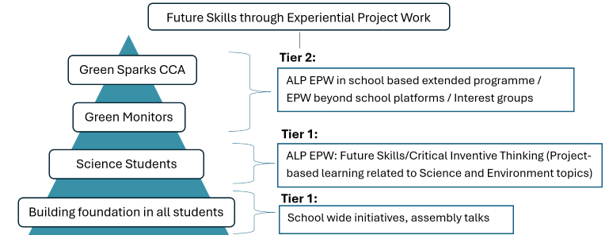
Applied Learning Programme (ALP): Future Skills through Experiential Project Work (EPW)
Department Aims
Sengkang Green Primary School’s ALP, Future Skills through Experiential Project Work, helps students appreciate the relevance of what they are learning in the academic curriculum and develops stronger motivation to acquire knowledge and skills to become future-ready.
Under the contextual theme of Sustainability and Conservation, all SKGians will engage in meaningful projects that integrate Science with other subject disciplines. The programme aligns with the outcomes of our Eco-stewardship Programme.
Key Programmes
The key features of our ‘Future Skills through Experiential Project Work’ are
(a) Strengthening of 21st Century Competencies with a strong focus on:
Critical, Adaptive and Inventive Thinking
Civic, Global and Cross-Cultural Literacy through cultivating appreciation and care for the environment, making discerning and responsible choices for sustainable living.
Communication, Collaboration and Information Skills to work together and articulate their breadth and depth of knowledge
(b) Becoming digitally-empowered, future-ready learners and innovators who are:
Self-directed in setting goals and managing their learning using a range of digital tools and resources
Collaborative and connected in using digital tools to co-construct and share knowledge with others
Apply digital literacy and technological skills to “distil and discern” through the effective use of technology.
Use human-centred methodologies to “discover” needs and “develop” solutions to real-world problems.
At project completion, the students share their reflection, experiences and projects to celebrate their learning.
Our Green Monitors and the Green Sparks CCA members will have opportunities to implement school-wide eco-initiatives, further deepening engagement in sustainability and environmental stewardship.
Primary 3
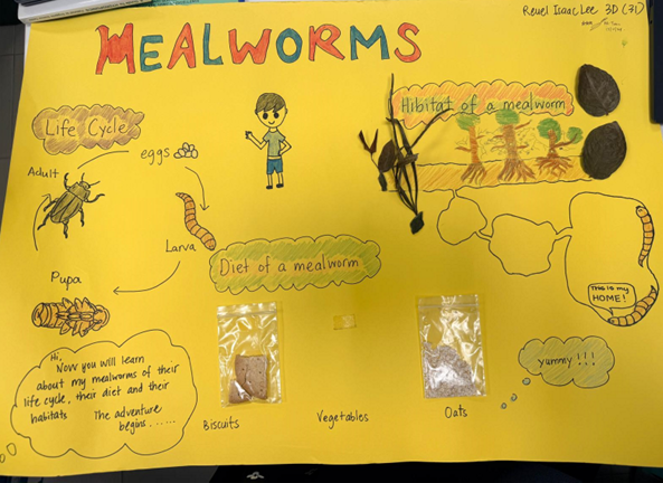
In Primary 3, students took on the role of Junior Entomologists by caring for mealworms and observing their life cycles. Through responsible feeding and habitat care, students learnt that living things depend on human actions. Recording observations using digital tools and expressing their learning through creative posters and artwork, students developed curiosity, critical thinking and empathy for living things. This authentic experience teaches responsibility for living creatures whilst developing scientific thinking and communication skills.
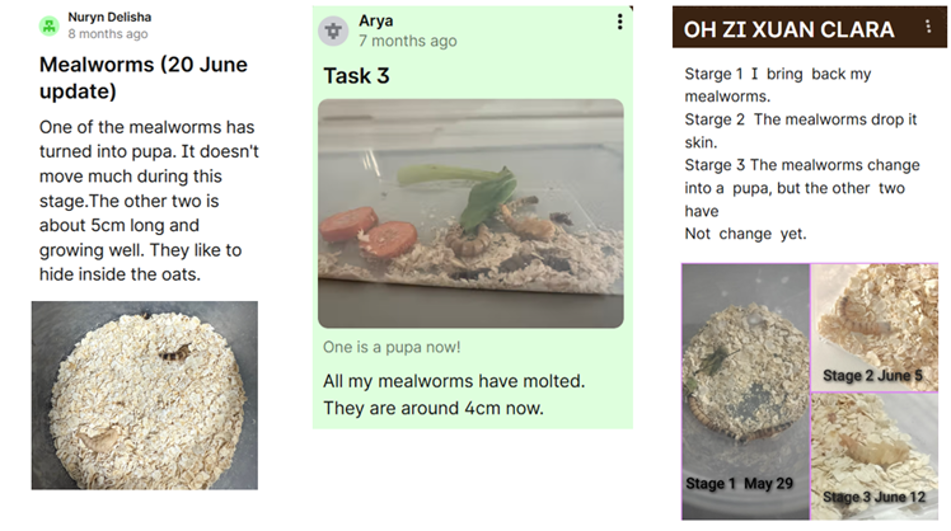
Capturing learning in action — Our Primary 3 students showcased their scientific observations and reflections on Padlet as part of their experiential learning journey.
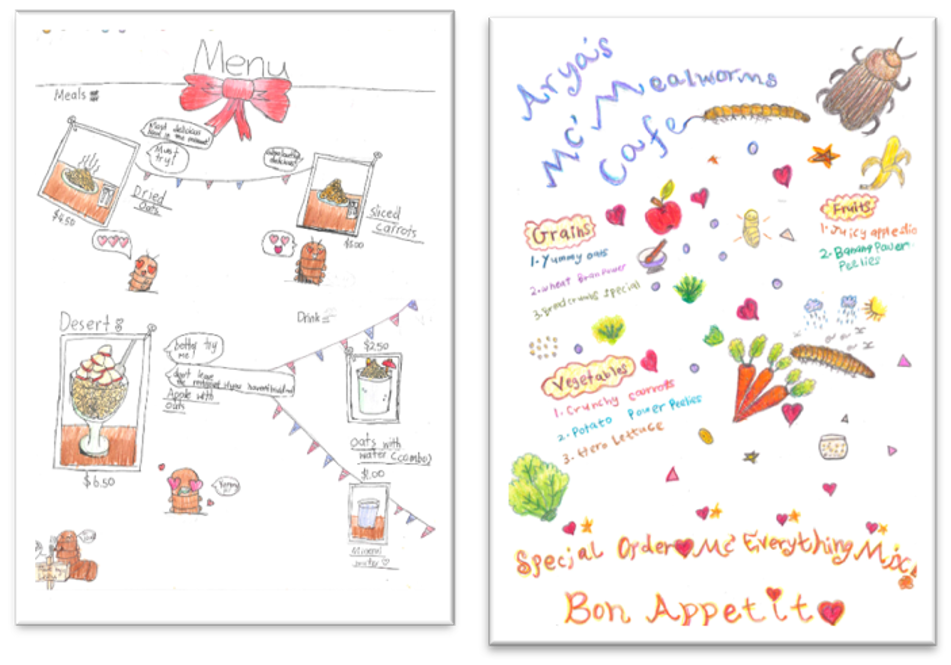
SKGian Meal designer (P3)
Learning through creativity — students designed fun and thoughtful menus based on the mealworm’s needs.
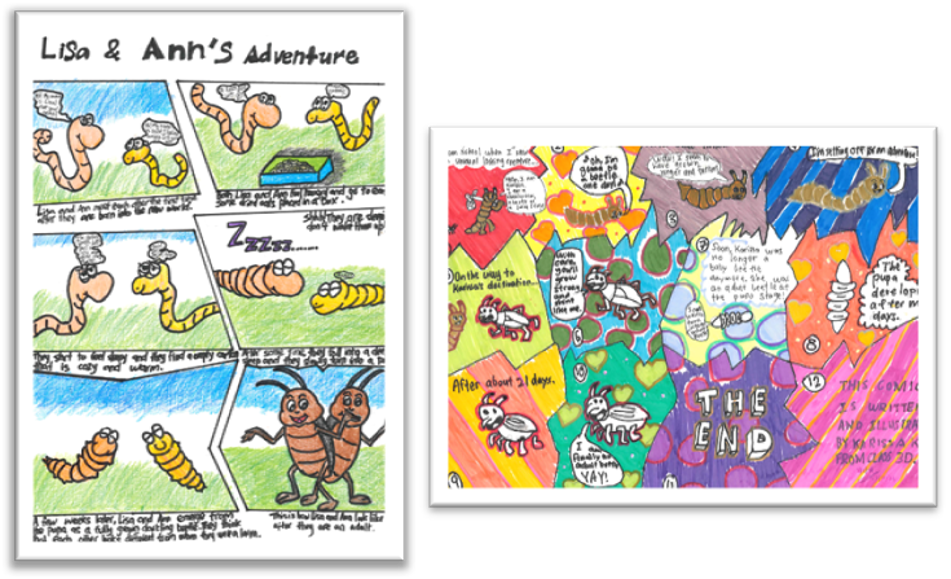
SKGian Comic Artist (P3)
By turning science into storytelling, students demonstrated creativity, communication and scientific understanding through their mealworm life cycle comics.
SKGian Poster Creator (P3)
By designing informative posters, students organised scientific information clearly while developing communication and presentation skills.
Primary 4
In Primary 4, students applied their understanding of heat transfer by designing a Super Cooler Box that reduced heat gain without using electricity. By selecting insulating materials and analysing temperature data, students learnt how conserving energy reduces environmental impact. Working collaboratively, they designed practical solutions that promote energy efficiency and sustainable resource use.
Building for sustainability!
Primary 4 students collaborate to construct their Super Cooler Box prototypes, applying their knowledge of insulators and heat transfer to create energy-efficient designs.
Testing Time!
Our Primary 4 students proudly test their Super Cooler Box prototype, measuring temperature to see how effectively their design keeps things cool without electricity. Through hands-on experimentation, they're discovering the science behind insulation and energy conservation!
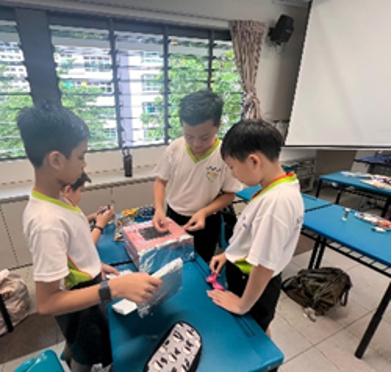
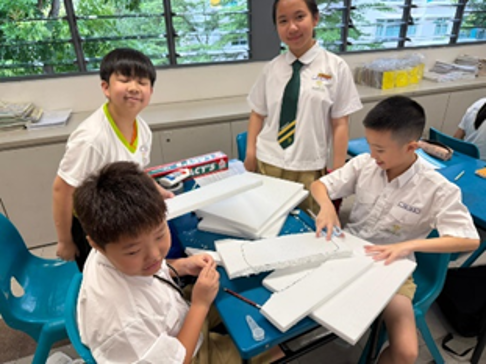
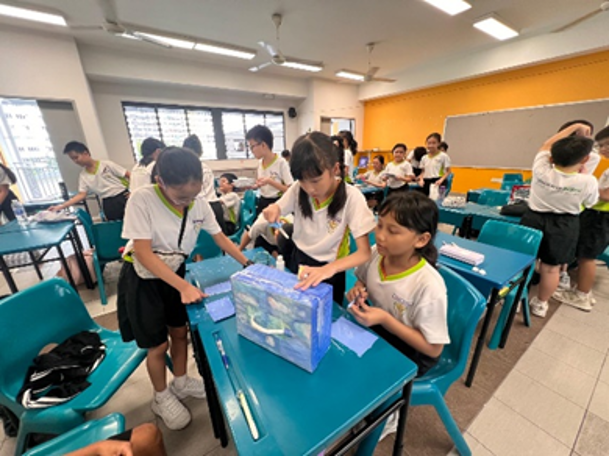
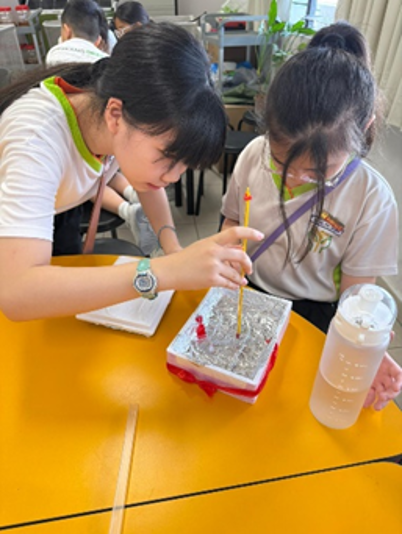
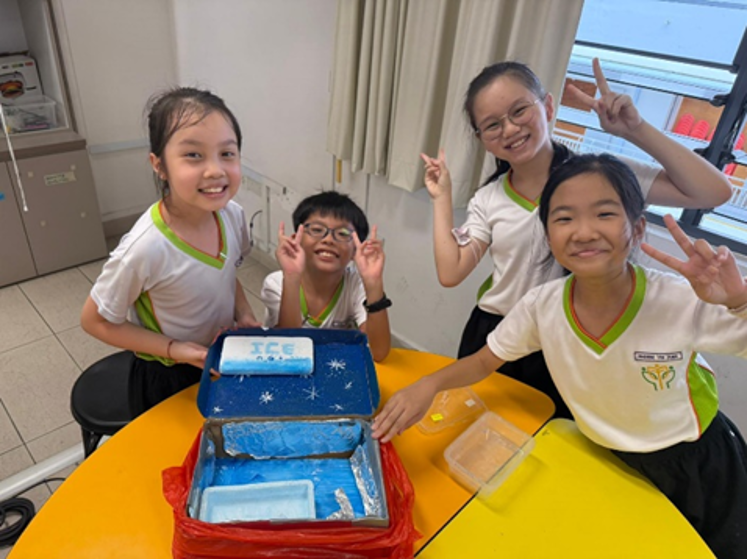
Mission accomplished! Proud Primary 4 students showcase their completed Super Cooler Box prototypes, ready to present their sustainable cooling solutions to the class.
Green Sparks
Farm-to-Table Initiatives
A key highlight of our eco-stewardship journey is the Farm-to-Table Initiative, which forms part of our Applied Learning Programme (ALP). Our Primary 3 students and Green Sparks CCA members grow vegetables using hydroponic and aeroponic systems within our school compound, learning how science and technology can support sustainable living.
Beyond the science of growing plants, students also experience the joy of giving. Two of their harvests were shared with our canteen vendors, who used the produce to prepare nutritious meals for the school community. Another harvest was donated to a community beneficiary, fostering empathy, compassion, and a sense of social responsibility.
Through these hands-on experiences, students learn about sustainable food production and gain a deeper appreciation for the effort involved in growing food. More importantly, they recognise the value of contributing to a larger cause. These meaningful experiences nurture environmentally responsible individuals who understand that every small action counts toward building a more sustainable future.
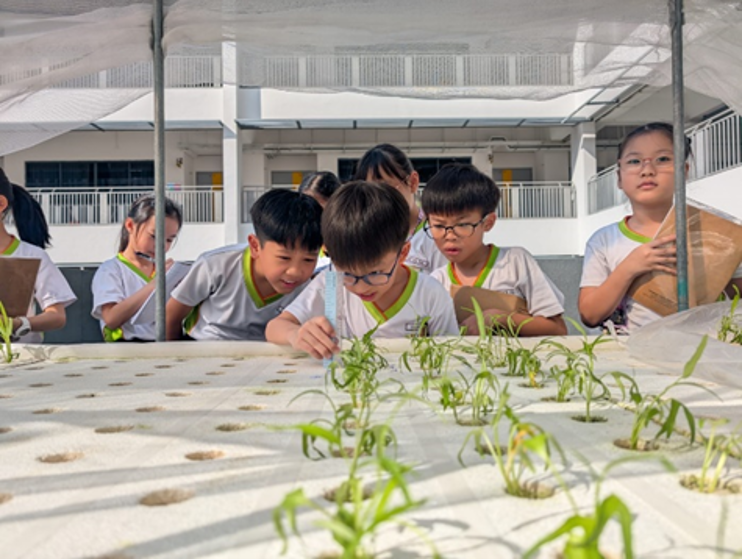
Measuring more than growth: Our P3 students track vegetable growth as part of our eco-stewardship journey and record for their experiential project work
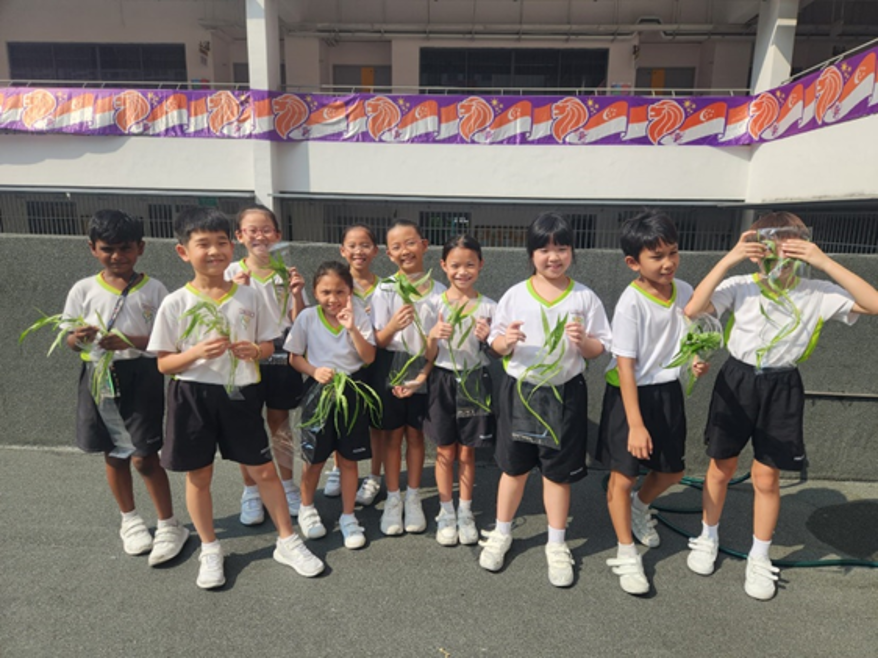
Our P3 students with their harvest to be donated to the community beneficiary.
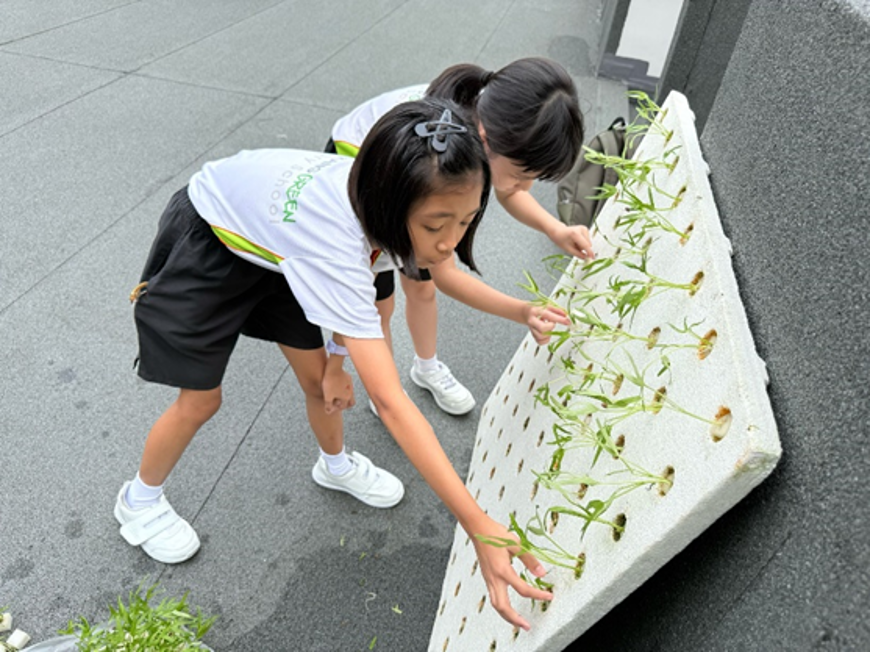
Green Sparks in action, transplanting seedlings to nurture the next cycle of growth for the farm to table initiative.
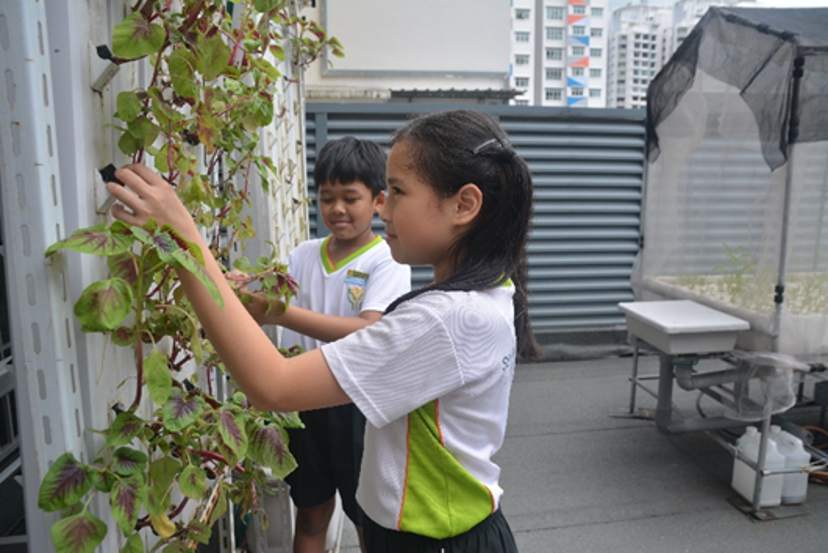
Our Green Sparks students checking the growth of the vegetables.
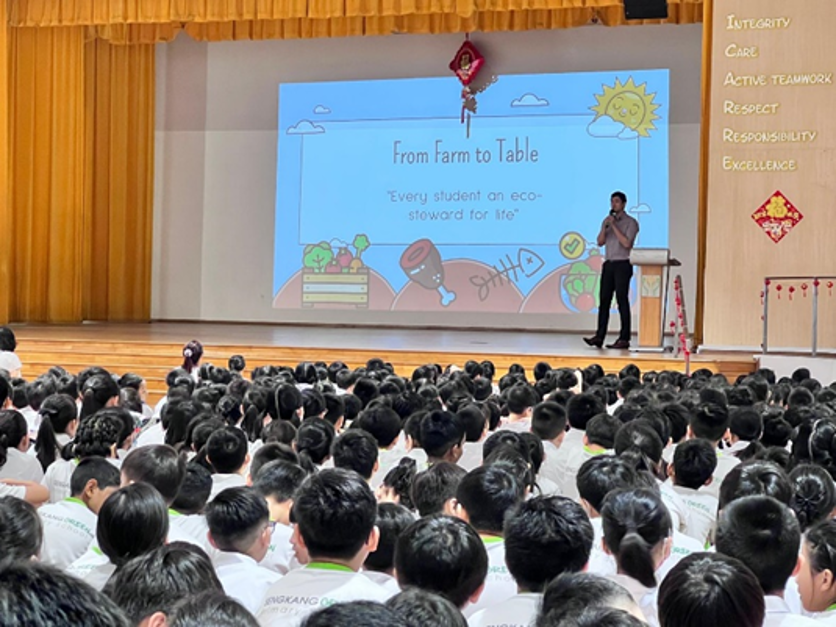
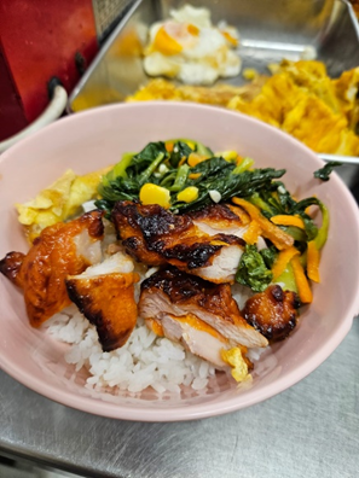
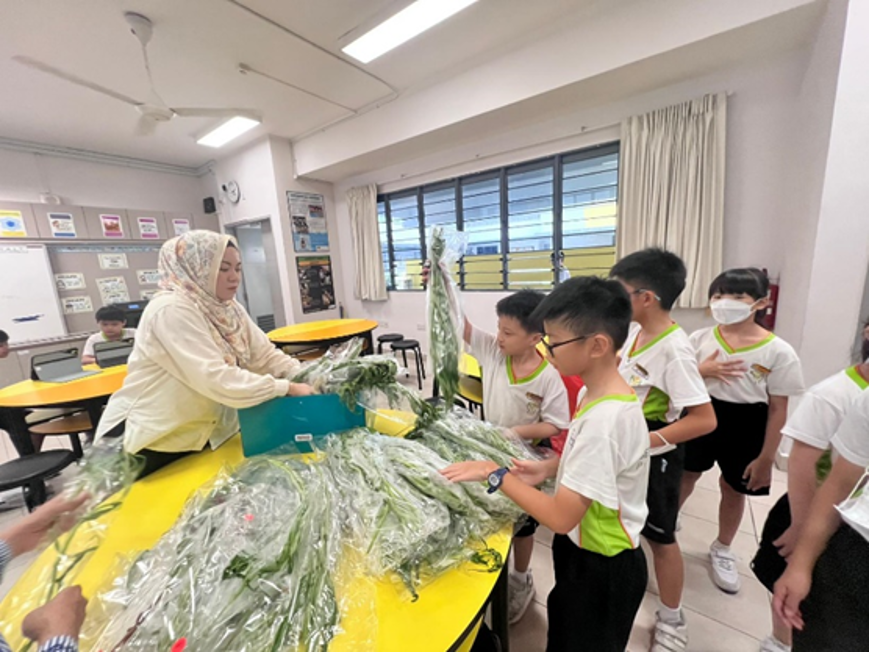
Our students with their hearts in action, packing their harvest for donation, connecting science with service.